ABOUT
I built this because I kept needing it.
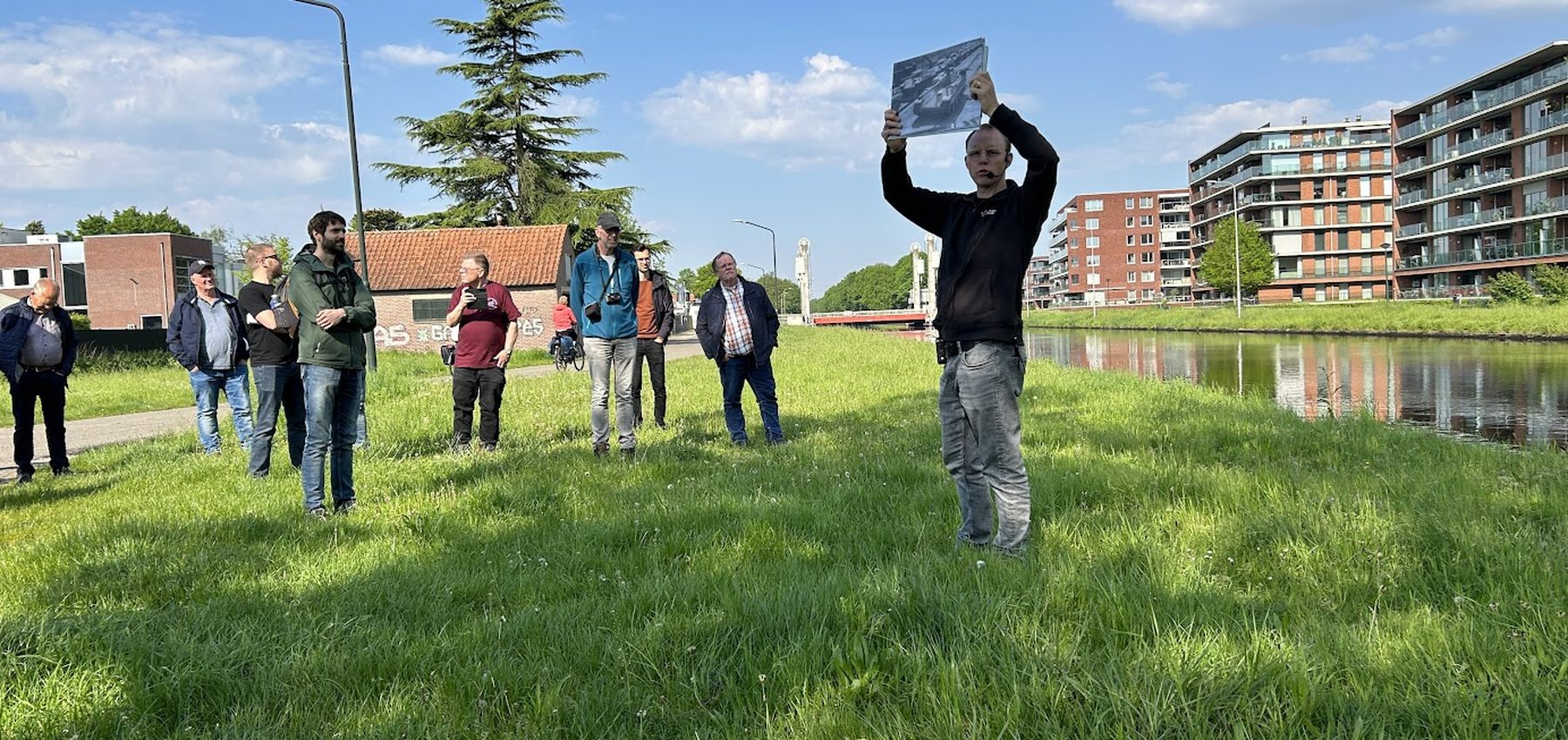
Son, on the Market Garden corridor. The day job.
My name is Joris Nieuwint. I guide battlefield tours through the Market Garden corridor and the Ardennes with The Battlefield Explorer, and I have been doing it long enough to know exactly which parts of the job are the work and which parts are just friction.
Guiding is the work. Recalculating the day in my head at every stop is the friction.
Here is what that actually looks like. The museum keeps the group twenty minutes longer than booked. Now I am standing in a car park working out whether lunch still holds, whether we can keep the last stop, what time the coach reaches the hotel, and whether the driver's hours still work. I am doing arithmetic while forty people watch me do it, and the answer has to be right, because a wrong one strands a group somewhere at seven in the evening.
Every guide and tour manager I know does this. Most of us do it with a spreadsheet printed that morning, a pen, and a memory of what the driving times usually are. It works, in the way that a lot of things in this industry work: because experienced people are absorbing the cost of it.
So I built the thing I wanted. Change one time and the rest of the day re-times itself, instantly and visibly, on a phone, on a moving coach, with no signal. Not a booking system. There are plenty of those and they are good at what they do. This is for the day itself.
Then something I did not expect
I put it in front of drivers, mostly as an afterthought, because they needed to know where to park. Drivers are not a group known for enthusiasm about new software, and I was ready for it to be ignored.
They loved it. Not tolerated it. Loved it.
One of them said they now knew exactly what was expected of them, and that sentence has stuck with me more than any feedback I have had about any part of my work. It turns out nobody had ever given them the day in a form built for their job: where the coach goes, what time, where to wait, what happens next. They had always been getting it second hand, in a phone call, usually late.
On a seven-day museum tour both tour managers, running separate coaches, started using it without being asked to, and so did both drivers. Two independent groups of people deciding on their own that a tool is worth using is the only product research I trust.
What that means for how it is built
I am the person who writes it and the person who has to live with it at the third stop of a long day. That has consequences you can see in the product. Type is large because it is read outdoors in daylight. It works offline because the Ardennes does not care about your signal. The driver's screen has almost nothing on it, because a driver holding a phone at a junction should not have to hunt.
It also means that when you email about a problem, you are emailing the person who can fix it, and who will probably be on a tour when your message arrives.